
 Facebook
 X
X
 Pinterest
 Copy Link
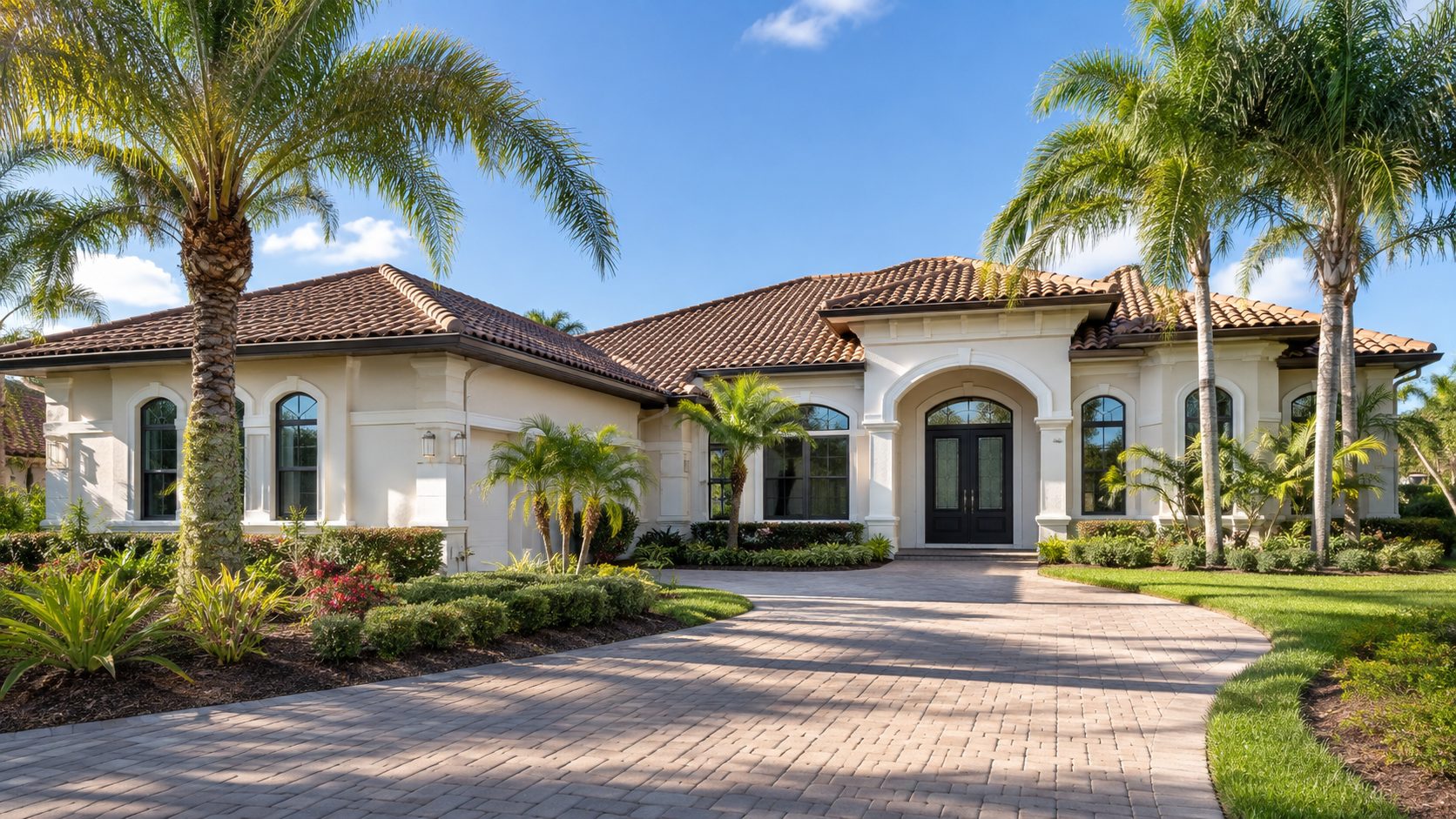
If you own a home in Florida, chances are you have checked its value online.
Maybe you looked at Zillow. Perhaps you checked Realtor.com, Redfin, or another home-value website.
Then you noticed something strange.
One website says your home is worth $625,000. Another says $670,000. A third gives you an entirely different number.
So which one is right?
The answer is important, especially if you are thinking about selling.
Online home estimates can be useful. However, they are best viewed as a starting point rather than a pricing strategy.
Why Do Online Home Estimates Differ?
Most online home-value tools use an Automated Valuation Model, commonly called an AVM.
These computer models analyze large amounts of property data. They may consider:
- Recent home sales
- Square footage
- Bedrooms and bathrooms
- Property records
- Lot size
- Previous sale prices
- General market trends
Each company uses its own formula. That is one reason you can enter the same address into three websites and receive three different estimates.
More importantly, an algorithm has never walked through your home.
It cannot experience the view from your lanai.
It may not understand that your street is more desirable than the one several blocks away.
And it cannot see how your home compares with the homes buyers are touring right now.
How Accurate Is a Zillow Zestimate?
Even Zillow describes its Zestimate as an estimate of market value rather than an appraisal.
According to Zillow, its nationwide median error rate is considerably higher for homes that are not currently listed for sale than for homes already on the market. Zillow reports a median error rate of about 7% for off-market homes.
That difference can become significant.
A 7% difference on a $600,000 home is $42,000.
That does not mean Zestimates are bad. They can provide a helpful reference point.
The problem begins when homeowners assume the number represents exactly what a buyer would pay.
Why Can Florida Home Values Be Especially Difficult to Estimate?
Florida real estate can be remarkably local.
Two houses with similar square footage and the same number of bedrooms may attract very different offers.
Here are some of the reasons.
Location Within the Neighborhood Matters
An algorithm may recognize that two homes are in the same community.
Buyers may see something very different.
One home might back to a preserve. Another might face another house.
One might sit on a quiet cul-de-sac. Another might be near a busy road.
Water views, golf course views, privacy, lot orientation and proximity to amenities can all influence buyer interest.
Sometimes those differences do not show up clearly in the data.
Coastal and Inland Markets Behave Differently
Florida does not have one housing market.
Sarasota can behave differently from Lakewood Ranch.
Venice can behave differently from Wellen Park.
Even two nearby communities can have different levels of inventory, buyer demand and competition.
That is why broad ZIP code or county data can be misleading when pricing an individual property.
A Home’s Condition Matters
Buyers respond to what they see.
A beautifully maintained home that feels move-in ready may compete differently from a similar home needing a new kitchen, flooring or paint.
Presentation matters too.
Photography, staging, cleanliness, landscaping and overall first impression can affect buyer enthusiasm.
An algorithm cannot fully measure that reaction.
Florida-Specific Property Features Matter
Florida buyers often pay close attention to features that may receive limited weight in an automated estimate.
These can include:
- Roof age
- Impact windows and doors
- Hurricane protection
- Pool condition
- Outdoor living space
- Flood zone
- Waterfront access
- Updated mechanical systems
- HOA and CDD fees
- Community amenities
- Insurance considerations
- Age and quality of renovations
For some buyers, these details can significantly change how one home compares with another.
Why Are Recent Comparable Sales So Important?
One of the most common questions sellers ask is:
“My neighbor’s house sold for $700,000. Doesn’t that mean mine is worth $700,000 too?”
Maybe.
But we need to look deeper.
When did it sell?
Was it renovated?
Did it have a pool?
Was the lot more private?
Was it larger?
Did it have a better view?
Did the seller offer concessions?
Most importantly, what has happened in the market since that sale?
A home that sold six months ago may be less useful than a very similar home that closed three weeks ago.
Real estate pricing is about the market now, not simply what something sold for in the past.
What If My Neighbor’s House Is Almost Identical to Mine?
This is where pricing gets interesting.
Imagine two homes with the same floor plan in the same community.
One has a preserve view, newer roof, updated kitchen and beautifully finished outdoor living area.
The other backs to another home and has its original finishes.
On paper, they look remarkably similar.
To buyers, they may not be similar at all.
The question isn’t simply, “What homes like mine have sold?”
A better question is:
“Which homes would a buyer compare with mine today, and how would they choose between them?”
That is a much more useful way to think about market value.
Why Did My Online Estimate Suddenly Change?
Homeowners also wonder why their online estimate sometimes jumps or falls without anything changing at their property.
New information may have entered the system.
A nearby home may have sold. Public records may have changed. Market conditions may have shifted.
Zillow also notes that additional listing information becomes available when a property goes on the market. That new information can cause its Zestimate to change.
Your house did not suddenly become a different house.
The computer simply received different information.
So How Do I Know What My Florida Home Is Really Worth?
There are actually several different numbers to consider.
An online estimate is a computer-generated starting point.
An appraisal is an opinion of value prepared by a licensed appraiser for a specific purpose.
A comparative market analysis looks at your home in the context of its current competition and recent comparable sales.
Then there is the number that ultimately matters most:
What today’s buyers are willing to pay.
Determining a likely selling price requires more than pulling three nearby sales.
I want to know:
What is selling?
What isn’t selling?
Which listings are sitting?
Which homes received price reductions?
What went pending quickly?
How does your home compare?
And what price would make a buyer choose your home over the alternatives?
That is the difference between estimating a home’s value and strategically positioning it for the market.
Should I Trust an Online Home Estimate?
Yes—as long as you understand what it is.
Use it as one piece of information.
Don’t use it as the sole reason to price your home.
An online estimate cannot walk through your property, understand the nuances of your neighborhood, evaluate your competition or hear what today’s buyers are saying after showings.
A good pricing analysis can.Thinking About Selling Your Florida Home?
Before deciding what your home is worth based on an online estimate, take a closer look at what buyers are actually doing in your market.
The right question isn’t:
“What does the internet say my house is worth?”
It’s:
“Where would buyers place my home among the choices they have today?”
That answer can make a meaningful difference in both your pricing strategy and your final result.
Your thoughtful guide to Florida life! Partner with Kathryn Plosica, a trusted Sarasota-based real estate advisor specializing in 55+ communities and lifestyle-focused moves in Wellen Park, Lakewood Ranch, and surrounding Gulf Coast areas. Known for her in-depth local knowledge, thoughtful guidance, and a strategic, no-pressure approach, Kathryn ensures your experience is seamless, informed, and aligned with what matters most to you, whether you’re relocating, downsizing, or searching for the right community fit.
